
- English
- Español
- Português
- русский
- Français
- 日本語
- Deutsch
- tiếng Việt
- Italiano
- Nederlands
- ภาษาไทย
- Polski
- 한국어
- Svenska
- magyar
- Malay
- বাংলা ভাষার
- Dansk
- Suomi
- हिन्दी
- Pilipino
- Türkçe
- Gaeilge
- العربية
- Indonesia
- Norsk
- تمل
- český
- ελληνικά
- український
- Javanese
- فارسی
- தமிழ்
- తెలుగు
- नेपाली
- Burmese
- български
- ລາວ
- Latine
- Қазақша
- Euskal
- Azərbaycan
- Slovenský jazyk
- Македонски
- Lietuvos
- Eesti Keel
- Română
- Slovenski
- मराठी
- Srpski језик

Why Are New Energy Vehicle Copper Foil Flexible Connectors Essential for Modern EV Systems?
As electric vehicles continue to reshape the global transportation industry, the demand for high-performance electrical connection components has increased rapidly. Among these critical components, New Energy Vehicle Copper Foil Flexible Connectors play an important role in ensuring stable current transmission, vibration resistance, thermal management, and overall vehicle reliability. This article explores their structure, advantages, applications, manufacturing process, material selection, installation considerations, and future development trends to help buyers, engineers, and manufacturers make informed decisions.
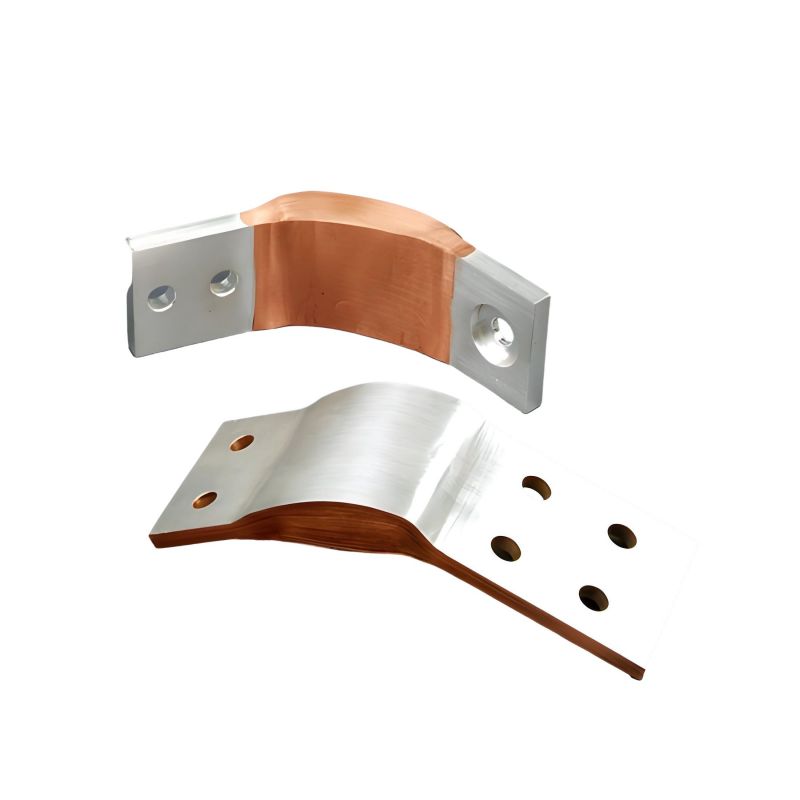
Table of Contents
- 1. What Are Copper Foil Flexible Connectors?
- 2. Why Are They Important in EV Systems?
- 3. Main Advantages of Copper Foil Flexible Connectors
- 4. Common Applications in New Energy Vehicles
- 5. Materials and Manufacturing Process
- 6. Copper Foil vs Traditional Busbars
- 7. How to Choose the Right Connector
- 8. Thermal and Electrical Performance
- 9. Installation and Maintenance Tips
- 10. Safety and Reliability Standards
- 11. Industry Trends and Future Innovations
- 12. Frequently Asked Questions
- 13. Conclusion
1. What Are Copper Foil Flexible Connectors?
New Energy Vehicle Copper Foil Flexible Connectors are conductive components made by laminating multiple thin copper foils together. These foils are usually welded or pressed at both ends to form reliable electrical connection terminals. Due to their flexibility and conductivity, they are widely used in electric vehicles, battery packs, charging systems, and energy storage applications.
Unlike rigid busbars, flexible connectors can absorb vibration, compensate for installation deviations, and reduce stress caused by thermal expansion. This makes them especially suitable for demanding automotive environments where durability and safety are essential.
Main Structural Components:
- High-conductivity copper foil layers
- Protective insulation sleeve
- Welded or brazed terminal ends
- Surface treatment such as tin plating or nickel plating
2. Why Are They Important in EV Systems?
Electric vehicles require efficient current transmission between batteries, inverters, motors, and charging systems. Traditional rigid conductors may crack or loosen under continuous vibration and thermal cycling. Copper foil flexible connectors solve these issues through their excellent flexibility and fatigue resistance.
In modern EV battery systems, large current loads generate significant heat. Flexible connectors help distribute electrical flow evenly while minimizing resistance and power loss. This contributes directly to improved vehicle efficiency and battery performance.
Vibration Resistance
Flexible copper structures absorb movement and reduce mechanical stress.
High Conductivity
Low electrical resistance ensures efficient energy transfer.
Thermal Stability
Excellent heat dissipation supports safer battery operation.
3. Main Advantages of Copper Foil Flexible Connectors
The growing popularity of EVs has accelerated demand for advanced conductive solutions. Copper foil flexible connectors provide several advantages that make them indispensable in modern electrical systems.
| Advantage | Description |
|---|---|
| Excellent Flexibility | Allows movement compensation and vibration absorption. |
| High Current Capacity | Supports large electrical loads in EV power systems. |
| Long Service Life | Resistant to fatigue, corrosion, and thermal cycling. |
| Compact Design | Ideal for limited installation spaces. |
| Improved Safety | Reduces overheating and electrical failure risks. |
4. Common Applications in New Energy Vehicles
Copper foil flexible connectors are used throughout electric vehicles and charging infrastructure. Their adaptability allows manufacturers to optimize system layouts while maintaining stable electrical performance.
- Battery Pack Connections: Connecting battery modules safely and efficiently.
- Motor Controllers: Delivering stable current between controllers and motors.
- Charging Systems: Supporting fast charging and high-current transfer.
- Power Distribution Units: Ensuring balanced current flow within the vehicle.
- Energy Storage Systems: Used in renewable energy and backup storage equipment.
- Hybrid Vehicle Systems: Managing power between multiple energy sources.
With the rapid development of high-voltage EV architectures, manufacturers increasingly rely on flexible copper connections to maintain efficiency and reliability.
5. Materials and Manufacturing Process
The quality of a copper foil flexible connector largely depends on material purity and manufacturing precision. High-conductivity copper is typically selected to reduce electrical resistance and enhance durability.
Manufacturing Steps
- Copper foil cutting
- Lamination and stacking
- Diffusion welding or brazing
- Terminal shaping
- Surface plating treatment
- Insulation application
- Electrical and mechanical testing
Advanced production technologies ensure strong bonding between copper layers while maintaining flexibility. Precision welding techniques also help minimize energy loss and contact resistance.
Common Surface Treatments:
- Tin plating for oxidation resistance
- Nickel plating for high-temperature environments
- Silver plating for ultra-high conductivity applications
6. Copper Foil vs Traditional Busbars
Many engineers compare flexible copper connectors with rigid busbars when designing EV systems. Both have advantages, but flexible connectors often perform better in dynamic operating conditions.
| Feature | Copper Foil Flexible Connector | Rigid Busbar |
|---|---|---|
| Flexibility | Excellent | Limited |
| Vibration Resistance | High | Moderate |
| Installation Adaptability | Strong | Restricted |
| Space Efficiency | Excellent | Average |
| Cost Efficiency | Competitive | Depends on application |
7. How to Choose the Right Connector
Selecting the correct copper foil flexible connector requires careful consideration of electrical, mechanical, and environmental factors.
Current Capacity
Ensure the connector can safely carry the required electrical load.
Operating Temperature
Choose suitable plating and insulation for thermal stability.
Mechanical Flexibility
Consider movement, vibration, and installation space.
Corrosion Resistance
Select appropriate coatings for harsh environments.
Customized solutions are increasingly common in the EV industry because different vehicle architectures require different conductor shapes and sizes.
8. Thermal and Electrical Performance
Efficient thermal management is critical in electric vehicle systems. Copper foil flexible connectors provide excellent heat dissipation because their laminated structure increases surface area exposure.
Their low resistance minimizes power loss and helps improve overall energy efficiency. In high-current environments such as battery systems and fast charging stations, maintaining stable electrical conductivity is essential for safe operation.
Key Performance Indicators:
- Electrical conductivity
- Temperature rise performance
- Mechanical fatigue resistance
- Short-circuit withstand capability
- Voltage drop performance
- Corrosion resistance
9. Installation and Maintenance Tips
Correct installation directly impacts connector lifespan and system safety. Improper bending or excessive tightening may damage conductive layers and reduce performance.
Best Installation Practices
- Avoid excessive bending radius
- Ensure clean terminal contact surfaces
- Use correct torque during fastening
- Prevent mechanical twisting during installation
- Perform periodic thermal inspections
- Check for discoloration or corrosion
Routine maintenance helps identify early signs of overheating, fatigue, or loose connections before major failures occur.
10. Safety and Reliability Standards
Automotive electrical systems must meet strict quality and safety requirements. Copper foil flexible connectors are commonly tested according to international standards related to conductivity, thermal performance, flame resistance, and vibration durability.
Manufacturers typically conduct:
- Current carrying tests
- Salt spray corrosion tests
- Thermal cycling tests
- Vibration resistance testing
- Tensile strength testing
- Electrical resistance inspection
Reliable testing ensures connectors can withstand the challenging conditions of electric vehicle operation.
11. Industry Trends and Future Innovations
As electric vehicle technology evolves, copper foil flexible connectors are also becoming more advanced. Manufacturers are developing lighter, thinner, and higher-capacity solutions to meet increasing power demands.
Future trends include:
- High-voltage connector systems for ultra-fast charging
- Improved lightweight conductor materials
- Enhanced thermal management technologies
- Compact integrated battery connection modules
- Smart monitoring systems for real-time diagnostics
- Advanced insulation materials for extreme environments
The rapid expansion of renewable energy and electric mobility will continue driving demand for reliable flexible conductive solutions worldwide.
12. Frequently Asked Questions
What is the main purpose of a copper foil flexible connector?
Its primary purpose is to provide stable and efficient electrical conductivity while allowing flexibility to absorb vibration and thermal expansion.
Why are flexible connectors better for EV systems?
Electric vehicles experience constant vibration and temperature changes. Flexible connectors improve durability and reduce stress compared to rigid conductors.
Can copper foil connectors handle high current loads?
Yes. Their laminated copper structure provides excellent conductivity and high current carrying capacity for demanding applications.
What surface treatments are commonly used?
Tin plating, nickel plating, and silver plating are commonly used to improve corrosion resistance and conductivity.
How long do copper foil flexible connectors last?
With proper design and installation, they can provide long-term reliable performance under demanding operating conditions.
13. Conclusion
New Energy Vehicle Copper Foil Flexible Connectors have become a crucial component in modern electric vehicle systems. Their ability to deliver high conductivity, flexibility, vibration resistance, and thermal stability makes them ideal for battery packs, charging infrastructure, and high-current EV applications.
As the global transition toward electrification accelerates, manufacturers and engineers must prioritize reliable conductive solutions that enhance safety, efficiency, and long-term durability. Choosing high-quality flexible connectors can significantly improve system performance while reducing maintenance risks.
Xiamen Lijingda Hardware Products Co., Ltd. specializes in high-quality conductive connection solutions for new energy vehicles, battery systems, and industrial electrical applications. With advanced manufacturing capabilities and strict quality control, the company provides customized copper foil flexible connectors designed to meet demanding performance requirements.
Contact us today to discuss your project requirements and discover reliable solutions for your EV electrical connection needs.