

As electric vehicles, battery energy storage systems, and renewable energy installations continue to develop, reliable electrical connections have become increasingly important. A New Energy Dipped Hard Copper Busbar combines the excellent electrical conductivity and mechanical strength of hard copper with an application-specific dipped protective coating. This article explores its structure, working principles, key benefits, manufacturing considerations, applications, and quality requirements. It also explains how engineers and purchasing professionals can evaluate busbar specifications to achieve dependable electrical performance, improved insulation protection, and long-term operational reliability.
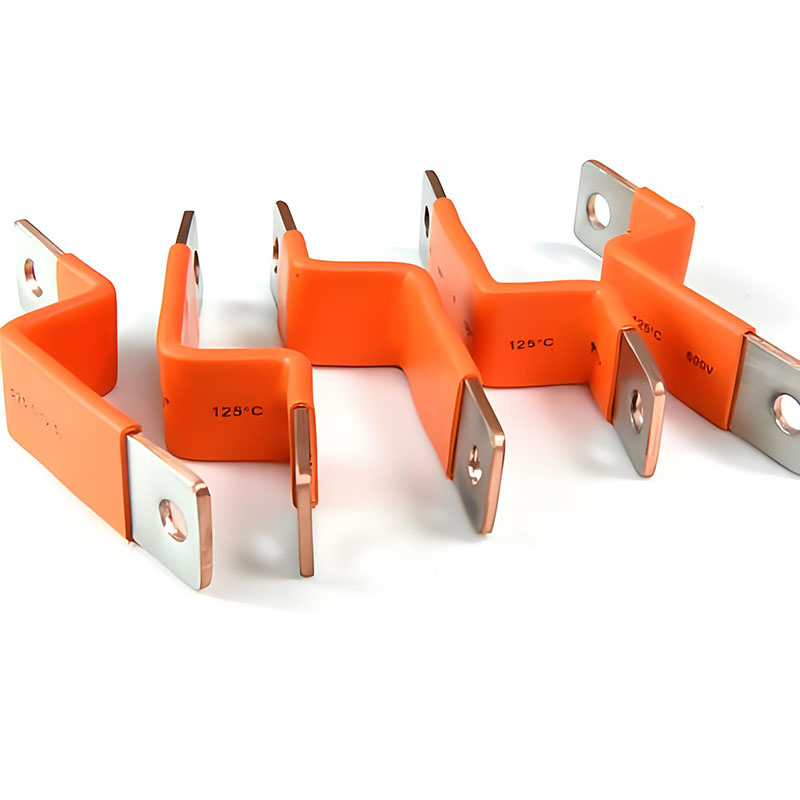
Table of Contents
- What Is a New Energy Dipped Hard Copper Busbar?
- How Does a Dipped Hard Copper Busbar Work?
- Key Advantages of Hard Copper Busbars
- Where Are Dipped Copper Busbars Used?
- Materials and Manufacturing Processes
- How to Choose the Right Copper Busbar
- Quality Control and Performance Testing
- Common Problems and Practical Solutions
- Why Customized Busbar Solutions Matter
- Frequently Asked Questions
- Final Considerations for Purchasing Professionals
1. What Is a New Energy Dipped Hard Copper Busbar?
A New Energy Dipped Hard Copper Busbar is an electrical connection component designed to distribute high-current power in modern energy systems. It generally consists of a rigid copper conductor with a protective coating applied through a dipping process. Depending on the design, the coating may provide electrical insulation, environmental protection, or other surface properties.
The copper conductor serves as the primary electrical pathway, while the surface treatment helps the component meet specific operating and installation requirements. This combination makes dipped hard copper busbars suitable for applications where electrical conductivity, mechanical stability, and connection safety must be considered together.
Understanding the Main Components
- Hard copper conductor: Provides a rigid structure, good electrical conductivity, and mechanical support.
- Dipped protective layer: Depending on the selected material and process, it can offer electrical insulation, abrasion protection, or environmental resistance.
- Connection terminals: Enable electrical connections with batteries, switches, power modules, and other conductive components.
- Mounting features: Holes, bends, and formed sections allow the busbar to fit into the equipment structure.
It is important to distinguish an insulating dip-coated busbar from a tin-dipped or tin-plated copper busbar. These treatments serve different purposes. Polymer dip coating is generally selected for insulation and physical protection, while metallic tin coating is commonly used to improve surface corrosion resistance and solderability. The correct interpretation should always be confirmed in the product drawing and technical specification.
2. How Does a Dipped Hard Copper Busbar Work?
A copper busbar provides a low-resistance pathway for electrical current between different components within a power system. In a battery pack, for example, busbars connect individual cells or modules and transfer electrical energy to the power conversion and distribution system.
When current flows through the copper conductor, electrical resistance generates heat. The conductor must therefore have an appropriate cross-sectional area and a suitable installation configuration to maintain an acceptable temperature rise under the expected operating load.
The Role of the Dipping Process
For an insulating dipped busbar, the conductor is prepared and then coated with a suitable insulating material. Depending on the selected coating technology, the process may involve immersion, heating, curing, or other controlled treatment steps.
The resulting layer can help prevent accidental electrical contact between adjacent conductors and reduce the risk of short circuits caused by unintended contact with nearby components. Its effectiveness depends on coating material, thickness, adhesion, coverage, and electrical insulation properties.
How the Two Main Functions Work Together
- Current transmission: The copper core carries electrical current between system components.
- Mechanical positioning: The rigid conductor maintains its designed shape and connection position.
- Surface protection: The selected coating provides the protection required by the operating environment.
- System integration: Terminals and mounting points connect the busbar to batteries, converters, and distribution equipment.
For purchasing teams, understanding this working principle is essential because an incorrect coating specification can result in a component that does not meet the actual insulation or environmental requirements of the application.
3. Key Advantages of Hard Copper Busbars
Hard copper busbars are widely considered for power applications because they offer a useful combination of electrical, thermal, and mechanical properties.
3.1 High Electrical Conductivity
Copper has excellent electrical conductivity, making it suitable for high-current power transmission. Compared with many alternative conductive materials, copper can achieve relatively low electrical resistance in a compact cross-sectional design.
Lower conductor resistance can help reduce resistive power losses and heat generation. However, actual performance depends on copper grade, conductor dimensions, temperature, connection quality, and operating current.
3.2 Mechanical Strength and Structural Stability
Hard copper generally has higher hardness and strength than softer annealed copper. This makes it useful for rigid busbar configurations that require dimensional stability during assembly and operation.
For equipment manufacturers, a stable conductor shape can simplify positioning, fastening, and integration into compact electrical enclosures.
3.3 Additional Protection Through Surface Treatment
The right coating can address specific problems that bare copper may encounter in demanding installations. Insulating coatings can reduce accidental contact risks, while suitable metallic coatings can help protect contact surfaces from oxidation and improve connection characteristics.
3.4 Space-Efficient Power Distribution
Rigid copper busbars can be designed around the available installation space. Customized bending, punching, cutting, and forming allow engineers to develop connection paths that fit battery modules and electrical assemblies.
3.5 Potential for Long-Term Operational Reliability
When material selection, surface treatment, connection design, and installation are properly controlled, a hard copper busbar can support stable electrical connections throughout its intended service life.
4. Where Are Dipped Copper Busbars Used?
New energy equipment often contains multiple electrical components that must operate together under demanding current and environmental conditions. Dipped hard copper busbars can be considered for several applications.
4.1 Electric Vehicle Battery Systems
Electric vehicle battery packs require reliable connections between battery cells, modules, and electrical distribution components. Copper busbars provide conductive pathways for charging and discharging current.
In these systems, insulation coverage, dimensional accuracy, vibration resistance, and connection stability are important design considerations. A customized dipped busbar may help address insulation and packaging requirements within limited battery compartment space.
4.2 Battery Energy Storage Systems
Battery energy storage systems (BESS) connect multiple battery modules to electrical distribution and power conversion equipment. Their busbar assemblies must accommodate operating current, thermal conditions, installation constraints, and maintenance requirements.
Protective coatings can be particularly useful when electrical clearances and accidental contact risks need to be managed inside compact enclosures.
4.3 Solar Power Systems
Solar inverters and related power distribution equipment use conductive components to connect electrical circuits and transfer generated energy. Copper busbars can support these connections while providing a compact alternative to some conventional wiring arrangements.
4.4 Wind Energy Equipment
Wind power conversion systems contain electrical connections that must withstand continuous operation, temperature variation, and equipment vibration. Properly designed copper busbars can be integrated into converters, control cabinets, and distribution assemblies.
4.5 Industrial Power Distribution
Industrial switchgear, control panels, charging equipment, and power conversion systems also use rigid copper conductors for high-current connections. The required coating and mechanical configuration depend on the electrical design and operating environment.
| Application | Primary Requirement | Important Design Consideration |
|---|---|---|
| EV battery packs | Reliable high-current connections | Insulation, vibration, and compact dimensions |
| Energy storage systems | Stable power distribution | Current capacity and thermal performance |
| Solar inverters | Efficient electrical transmission | Connection resistance and environmental protection |
| Wind power equipment | Continuous electrical operation | Mechanical stability and temperature variation |
| Industrial switchgear | Dependable power connections | Electrical clearances and short-circuit requirements |
5. Materials and Manufacturing Processes
The performance of a New Energy Dipped Hard Copper Busbar starts with material selection and continues through every manufacturing stage. Consistency across these stages is important for achieving the required electrical and mechanical properties.
5.1 Copper Material Selection
Common copper grades used in electrical busbar manufacturing include C11000 and C10200, subject to application requirements and applicable material standards.
C11000 is commonly associated with high electrical conductivity and is used in many electrical conductor applications. C10200 is oxygen-free copper, which may be selected when particular material characteristics or manufacturing conditions make it appropriate.
However, copper grade alone does not determine whether a component is suitable. Engineers should also consider hardness, tensile properties, electrical conductivity, dimensional tolerances, and forming requirements.
5.2 Cutting and Forming
Copper stock is processed into the required dimensions through cutting, stamping, punching, bending, or machining. These operations create the conductor shape, terminal geometry, mounting holes, and connection features.
Accurate processing helps prevent assembly interference and reduces the risk of alignment problems during equipment installation.
5.3 Surface Preparation
Before dipping or plating, the copper surface must be prepared according to the selected treatment process. Cleaning and other pretreatment operations help remove contaminants, oils, and surface oxides that may affect coating adhesion or consistency.
5.4 Dipping and Coating
The coating process should be selected according to the required function:
- Polymer dip coating: Used when electrical insulation and physical surface protection are required.
- Powder or other protective coatings: May be used for specific insulation, durability, or environmental requirements.
- Metallic tin coating: Used to improve surface protection, solderability, and contact characteristics where specified.
- Selective surface treatment: Applied to designated areas when the design requires different surface properties at connection points and other sections.
These processes are not interchangeable. For example, a polymer insulating layer must not cover a bolted electrical contact surface unless the design specifically provides a suitable contact arrangement.
5.5 Final Processing and Inspection
After coating, the busbar may undergo curing, cooling, trimming, dimensional verification, and additional finishing operations. Inspection should confirm that the finished product matches the approved drawing and technical requirements.
6. How to Choose the Right Copper Busbar
Selecting the correct busbar requires more than comparing product prices or conductor dimensions. Purchasing professionals and design engineers should evaluate the component according to its actual operating conditions.
6.1 Determine the Required Current Capacity
Current capacity is one of the most important selection factors. A busbar that is too small may experience excessive temperature rise, while an unnecessarily large conductor may increase material costs and reduce available installation space.
Engineers should evaluate:
- Continuous operating current.
- Peak and short-duration current.
- Permitted conductor temperature.
- Ambient temperature and enclosure conditions.
- Cooling and ventilation arrangements.
- Duty cycle and expected operating time.
6.2 Confirm Conductor Dimensions
Width, thickness, length, and cross-sectional area influence electrical resistance, heat generation, and mechanical strength. Mounting-hole positions and bending angles also affect whether the component can be installed correctly.
6.3 Select the Appropriate Coating
Do not assume that every dipped copper busbar uses the same protective material. The correct specification depends on whether the primary requirement is insulation, corrosion protection, solderability, or a combination of these properties.
6.4 Evaluate the Installation Environment
Humidity, temperature variation, dust, chemical exposure, vibration, and mechanical stress can influence service performance. The selected coating must be compatible with the actual environmental conditions.
6.5 Consider Assembly and Maintenance
Connection accessibility, fastening torque, installation sequence, and inspection requirements should be evaluated before finalizing the design. A technically suitable busbar may still create unnecessary assembly difficulties if its terminal structure does not match the equipment.
| Selection Factor | Questions to Ask | Why It Matters |
|---|---|---|
| Conductor material | Which copper grade and hardness are required? | Determines electrical and mechanical characteristics |
| Dimensions | What are the width, thickness, and length? | Affects current capacity and installation fit |
| Coating | Is insulation or metallic surface protection needed? | Determines the appropriate treatment process |
| Operating current | What are the continuous and peak current values? | Supports thermal and electrical design |
| Environment | Will the component face moisture, vibration, or heat? | Influences material and coating selection |
| Connection design | Are special holes, bends, or terminals required? | Ensures assembly compatibility |
7. Quality Control and Performance Testing
Quality inspection is essential because defects in a busbar can affect the performance of an entire electrical assembly. A structured inspection process should cover raw materials, manufacturing accuracy, surface treatment, and finished-product performance.
Important Inspection Items
- Material verification: Confirm copper grade, material condition, and relevant mechanical and electrical properties.
- Dimensional inspection: Measure conductor thickness, width, length, hole positions, and bending dimensions.
- Coating inspection: Check surface coverage, appearance, thickness where applicable, and adhesion.
- Electrical conductivity: Verify that the conductor meets the specified electrical requirements.
- Insulation testing: For insulating dipped products, evaluate dielectric strength and insulation resistance according to the relevant specification.
- Connection testing: Assess contact resistance and connection performance under defined test conditions.
- Environmental testing: Conduct applicable temperature, humidity, vibration, or corrosion tests where required.
Why Connection Quality Deserves Special Attention
Even when the copper conductor itself has excellent conductivity, a poorly designed or improperly fastened connection can create localized resistance and heat. This may eventually lead to discoloration, coating damage, loosening, or other performance issues.
For this reason, testing should consider the complete connection assembly rather than evaluating only the copper material in isolation.
Relevant design and verification standards may include IEC 61439 for low-voltage switchgear and controlgear assemblies and IEC 60664-1 for insulation coordination, where applicable. The exact standards and test methods should be determined by the equipment type and applicable regulations.
8. Common Problems and Practical Solutions
Understanding typical busbar problems helps buyers identify risks before mass production and reduce unexpected maintenance costs.
Problem 1: Excessive Temperature Rise
Possible causes: Insufficient conductor cross-section, excessive current, poor ventilation, high contact resistance, or improper fastening.
Practical solution: Review current calculations, verify connection torque, assess thermal conditions, and inspect the complete electrical path.
Problem 2: Coating Peeling or Surface Damage
Possible causes: Inadequate surface preparation, unsuitable coating materials, poor process control, or mechanical damage during transportation and assembly.
Practical solution: Specify coating adhesion requirements, establish inspection procedures, and use appropriate packaging and handling methods.
Problem 3: Insulation Failure
Possible causes: Insufficient coating thickness, pinholes, sharp edges, mechanical abrasion, or incorrect dielectric material selection.
Practical solution: Define insulation performance requirements, inspect coating coverage, and verify electrical clearances in the final assembly.
Problem 4: Difficult Installation
Possible causes: Incorrect hole positions, dimensional deviations, unsuitable bending angles, or interference with surrounding components.
Practical solution: Provide accurate engineering drawings, confirm tolerances, and conduct sample assembly checks before mass production.
Problem 5: Corrosion at Connection Points
Possible causes: Inappropriate surface treatment, environmental exposure, incompatible materials, or damaged contact surfaces.
Practical solution: Select a suitable metallic finish where required, evaluate material compatibility, and protect electrical interfaces during storage and installation.
9. Why Customized Busbar Solutions Matter
Standard copper bars may not meet the mechanical and electrical requirements of every new energy application. Customized busbars allow manufacturers and equipment developers to align conductor geometry, coating specifications, and connection structures with their actual designs.
Common Customization Options
- Customized copper grades and hardness conditions.
- Different conductor widths, thicknesses, and lengths.
- Specific bending angles and three-dimensional configurations.
- Customized mounting holes and terminal structures.
- Application-specific insulating or metallic surface treatments.
- Special packaging and identification requirements.
Information to Prepare Before Requesting a Quotation
To reduce communication time and improve quotation accuracy, buyers should prepare the following information:
- Product drawings or reference samples.
- Copper material grade and required hardness.
- Conductor dimensions and tolerances.
- Operating current and voltage requirements.
- Coating type, thickness, and performance requirements.
- Operating temperature and environmental conditions.
- Estimated order quantity and delivery expectations.
Clear technical documentation helps suppliers evaluate manufacturing feasibility and identify potential design issues before production begins.
10. Frequently Asked Questions
Q1: What is a New Energy Dipped Hard Copper Busbar?
A New Energy Dipped Hard Copper Busbar is a rigid copper electrical conductor with a protective surface treatment applied through a dipping process. Depending on the coating material, it can provide electrical insulation, physical protection, or other application-specific surface properties. It is used in battery systems, electric vehicles, and power distribution equipment.
Q2: Why is hard copper used for busbars?
Hard copper offers good electrical conductivity together with greater mechanical strength and dimensional stability than softer copper conditions. These characteristics make it suitable for rigid electrical connections that require a stable shape during assembly and operation.
Q3: What is the difference between dipped and tin-plated copper busbars?
Dipped busbars may use polymer materials to create an insulating protective layer. Tin-plated copper busbars use a metallic tin coating to improve surface protection and solderability. Although both involve surface treatment, their functions and manufacturing processes are different.
Q4: Can dipped hard copper busbars be customized?
Yes. Depending on manufacturing capabilities, customization may include conductor dimensions, copper grade, hardness, bending angles, terminal holes, coating materials, and surface treatment specifications. Buyers should provide drawings and technical requirements for evaluation.
Q5: Are copper busbars suitable for electric vehicle battery packs?
Copper busbars are commonly used in electric vehicle battery systems because of their electrical conductivity and ability to support compact, high-current connections. The final design must satisfy the battery system's current, temperature, insulation, vibration, and mechanical requirements.
Q6: How do I determine the required busbar thickness?
Thickness should be determined together with width, operating current, conductor temperature, ambient conditions, cooling arrangements, and allowable temperature rise. It is not advisable to select a thickness based on current alone without considering the complete installation.
Q7: What tests should a dipped copper busbar undergo?
Typical verification may include dimensional inspection, material verification, coating thickness and adhesion checks, electrical conductivity measurement, insulation resistance, dielectric strength, and connection resistance testing. Additional environmental tests should be selected according to the application.
Q8: What information should I provide when purchasing customized copper busbars?
Prepare product drawings, copper specifications, dimensions, operating current, voltage, coating requirements, environmental conditions, order quantity, and any relevant testing or compliance requirements. These details help manufacturers assess feasibility and provide a more accurate quotation.
Q9: How can I improve the service life of a copper busbar?
Choose suitable conductor and coating materials, maintain proper connection torque, prevent mechanical damage, ensure adequate cooling and electrical clearances, and carry out inspections according to the equipment maintenance plan.
11. Final Considerations for Purchasing Professionals
Choosing a reliable New Energy Dipped Hard Copper Busbar requires a comprehensive understanding of electrical performance, mechanical requirements, coating technology, and manufacturing quality. A product that performs well in one application may not automatically be suitable for another, particularly when current levels, operating temperatures, and insulation requirements differ.
For engineering teams, the priority should be to match conductor specifications and surface treatment processes with the actual operating environment. For procurement professionals, evaluating technical documentation, dimensional consistency, quality inspection procedures, customization capabilities, and supplier communication is equally important.
By addressing these factors during the early stages of product selection, businesses can reduce compatibility problems, improve assembly efficiency, and build more dependable electrical systems for electric vehicles, renewable energy installations, and energy storage equipment.
Looking for a Reliable Copper Busbar Solution?
Every new energy application has its own electrical, structural, and surface treatment requirements. Xiamen Lijingda Hardware Products Co., Ltd. welcomes inquiries from equipment manufacturers, engineering teams, and purchasing professionals seeking suitable hardware product solutions.
Whether you are evaluating a new project, reviewing technical drawings, or looking for a customized component, our team is ready to discuss your requirements and help identify an appropriate solution.
Contact us today to discuss your project specifications, request product information, and explore potential cooperation opportunities.