
- English
- Español
- Português
- русский
- Français
- 日本語
- Deutsch
- tiếng Việt
- Italiano
- Nederlands
- ภาษาไทย
- Polski
- 한국어
- Svenska
- magyar
- Malay
- বাংলা ভাষার
- Dansk
- Suomi
- हिन्दी
- Pilipino
- Türkçe
- Gaeilge
- العربية
- Indonesia
- Norsk
- تمل
- český
- ελληνικά
- український
- Javanese
- فارسی
- தமிழ்
- తెలుగు
- नेपाली
- Burmese
- български
- ລາວ
- Latine
- Қазақша
- Euskal
- Azərbaycan
- Slovenský jazyk
- Македонски
- Lietuvos
- Eesti Keel
- Română
- Slovenski
- मराठी
- Srpski језик

Why Are Automotive Metal Stamping Brackets Essential for Modern Vehicle Manufacturing?
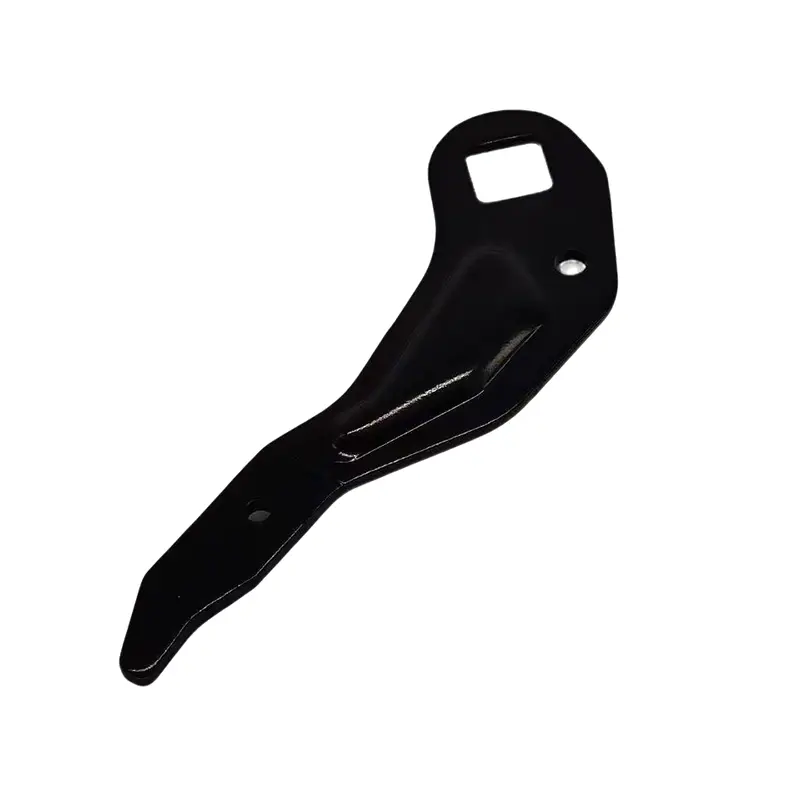
Automotive metal stamping brackets play a critical role in vehicle structure, safety, durability, and assembly efficiency. From engine systems to chassis support, these precision-engineered components are found in nearly every part of a modern automobile. This comprehensive guide explores their manufacturing process, material selection, applications, quality standards, and how businesses can choose reliable suppliers for long-term success.
Article Summary
In the automotive industry, even the smallest structural component can influence vehicle safety, production efficiency, and product lifespan. Automotive metal stamping brackets are widely used because they offer high precision, strong mechanical performance, and cost-effective mass production capabilities. This article explains the manufacturing technologies behind automotive stamping brackets, key material choices, common industry challenges, and practical ways to improve production reliability while reducing costs.
Table of Contents
- 1. What Are Automotive Metal Stamping Brackets?
- 2. Why Are Stamping Brackets Important in Vehicle Manufacturing?
- 3. Which Materials Are Commonly Used?
- 4. How Does the Metal Stamping Process Work?
- 5. What Are the Main Types of Automotive Brackets?
- 6. How Do Manufacturers Ensure Precision and Quality?
- 7. Common Challenges in Automotive Stamping Production
- 8. How Can Custom Brackets Improve Vehicle Performance?
- 9. What Should Buyers Look for in a Supplier?
- 10. Future Trends in Automotive Metal Stamping
- 11. Frequently Asked Questions
- 12. Final Thoughts
1. What Are Automotive Metal Stamping Brackets?
Automotive metal stamping brackets are precision-engineered metal components designed to support, connect, reinforce, or stabilize different systems inside a vehicle. These brackets are manufactured through metal stamping technology, a highly efficient production method that shapes sheet metal into complex forms using specialized dies and presses.
They are used throughout automobiles, including engine compartments, suspension systems, dashboards, battery systems, seating assemblies, exhaust systems, and structural body frames. Despite often being hidden from view, these brackets are critical for vehicle integrity and operational safety.
Key Functions of Automotive Brackets:
- Structural reinforcement
- Component mounting support
- Vibration reduction
- Load distribution
- Electrical component positioning
- Safety enhancement
As vehicles become lighter, smarter, and more complex, the demand for high-precision automotive stamping brackets continues to rise rapidly.
2. Why Are Stamping Brackets Important in Vehicle Manufacturing?
Modern automotive manufacturing depends heavily on consistency, repeatability, and structural reliability. Metal stamping brackets provide all three advantages while maintaining cost efficiency during large-scale production.
“A single poorly designed bracket can affect assembly alignment, increase vibration, or compromise long-term durability.”
Automotive manufacturers rely on these components because they simplify assembly operations and improve production speed. Precision brackets allow automated robotic systems to install components accurately without repeated manual adjustments.
| Benefit | Description |
|---|---|
| High Precision | Ensures exact positioning of automotive parts |
| Mass Production Efficiency | Supports high-volume manufacturing with stable quality |
| Reduced Assembly Time | Improves manufacturing efficiency |
| Enhanced Durability | Provides strong structural support under stress |
| Weight Reduction | Helps improve fuel efficiency and EV performance |
In electric vehicles, lightweight stamped brackets have become even more important because reducing vehicle weight directly improves battery efficiency and driving range.
3. Which Materials Are Commonly Used?
Material selection directly affects bracket performance, corrosion resistance, strength, and manufacturing cost. Different automotive applications require different material properties depending on environmental conditions and load requirements.
| Material | Main Advantages | Typical Applications |
|---|---|---|
| Carbon Steel | Strong and economical | Structural supports |
| Stainless Steel | Excellent corrosion resistance | Exhaust systems |
| Aluminum | Lightweight and corrosion-resistant | Electric vehicles |
| Galvanized Steel | Improved rust protection | Exterior applications |
| High-Strength Steel | Superior load capacity | Safety-critical components |
Aluminum has gained significant popularity in recent years because automakers are aggressively reducing vehicle weight to meet fuel economy standards and EV efficiency goals.
Meanwhile, high-strength steel remains essential for structural safety areas where impact resistance is critical.
4. How Does the Metal Stamping Process Work?
Automotive metal stamping is a highly automated manufacturing process involving specialized tooling, presses, and precision engineering. The process transforms flat sheet metal into finished bracket components with exact dimensions.
Main Metal Stamping Steps:
- Material preparation
- Sheet feeding
- Tool and die positioning
- Punching and forming
- Bending and shaping
- Surface finishing
- Inspection and testing
Advanced stamping facilities use progressive dies that perform multiple operations in one continuous production cycle. This greatly improves production speed and consistency.
Computer-controlled servo presses now allow manufacturers to achieve tighter tolerances and more complex geometries than traditional mechanical stamping equipment.
5. What Are the Main Types of Automotive Brackets?
Automotive brackets vary significantly depending on their function and installation position. Each bracket type must meet specific load-bearing and environmental requirements.
| Bracket Type | Main Purpose |
|---|---|
| Engine Mount Brackets | Support engine positioning and vibration control |
| Battery Brackets | Secure battery systems safely |
| Seat Brackets | Provide passenger seat stability |
| Chassis Brackets | Strengthen vehicle frame structure |
| Dashboard Brackets | Support instrument panel assemblies |
| Exhaust Brackets | Hold exhaust systems securely |
Electric vehicle manufacturers also require specialized brackets for battery management systems, cooling modules, and charging infrastructure components.
6. How Do Manufacturers Ensure Precision and Quality?
Quality control is essential in automotive manufacturing because even minor dimensional variations can create assembly problems or safety risks.
Leading manufacturers implement strict inspection systems throughout every stage of production. Automated quality monitoring tools help reduce defects and improve production consistency.
Common Quality Control Methods:
- Coordinate measuring machine inspection
- Laser dimensional analysis
- Surface roughness testing
- Tensile strength evaluation
- Corrosion resistance testing
- Salt spray testing
Precision tooling maintenance is equally important. Worn dies can quickly create dimensional inconsistencies, burrs, or material deformation.
Companies such as Xiamen Lijingda Hardware Products Co., Ltd. focus heavily on production precision, tooling quality, and stable manufacturing systems to meet demanding automotive industry requirements.
7. Common Challenges in Automotive Stamping Production
Automotive stamping manufacturers face several technical and operational challenges that can impact productivity, quality, and profitability.
| Challenge | Impact | Possible Solution |
|---|---|---|
| Material Springback | Dimensional inaccuracy | Advanced simulation software |
| Die Wear | Reduced precision | Regular tooling maintenance |
| Burr Formation | Safety and assembly issues | Precision cutting optimization |
| Surface Defects | Poor appearance and corrosion risk | Improved finishing process |
| Production Delays | Supply chain disruption | Automation and inventory planning |
Digital manufacturing technologies and AI-assisted process monitoring are helping manufacturers reduce production risks while improving operational efficiency.
8. How Can Custom Brackets Improve Vehicle Performance?
Standard brackets may work for general applications, but custom-engineered brackets often deliver better performance, reduced weight, and improved integration with modern automotive systems.
Custom bracket solutions are particularly important for electric vehicles, autonomous systems, and high-performance automotive platforms where space optimization is critical.
Advantages of Custom Automotive Brackets:
- Optimized structural strength
- Reduced overall vehicle weight
- Better component integration
- Improved thermal management
- Enhanced vibration resistance
- Higher assembly efficiency
Engineers often use 3D modeling and finite element analysis to optimize bracket geometry before mass production begins.
9. What Should Buyers Look for in a Supplier?
Selecting the right automotive stamping supplier is crucial for ensuring long-term product quality, supply chain reliability, and cost control.
Buyers should evaluate not only pricing but also technical capability, manufacturing experience, engineering support, and production scalability.
| Evaluation Factor | Why It Matters |
|---|---|
| Manufacturing Experience | Reduces technical production risks |
| Tooling Capability | Ensures precision and customization |
| Quality Certification | Demonstrates production standards |
| Production Capacity | Supports stable large-volume supply |
| Engineering Support | Improves product development speed |
| Communication Efficiency | Reduces project delays |
Reliable suppliers should also provide flexible customization services and proactive technical assistance throughout the product lifecycle.
10. Future Trends in Automotive Metal Stamping
The automotive industry is evolving rapidly due to electrification, lightweight design requirements, and smart manufacturing technologies.
Metal stamping manufacturers are adapting by investing in automation, advanced materials, and digital production systems.
Key Industry Trends:
- Increased use of lightweight aluminum alloys
- Growth of electric vehicle bracket demand
- AI-powered quality inspection systems
- Smart factory automation
- High-strength ultra-thin materials
- Sustainable manufacturing processes
Manufacturers capable of combining precision engineering with flexible production systems will remain highly competitive in the coming years.
11. Frequently Asked Questions
Q1: What is the main advantage of metal stamping in automotive manufacturing?
Metal stamping enables high-volume production with excellent precision, repeatability, and cost efficiency.
Q2: Are aluminum stamping brackets better than steel brackets?
Aluminum brackets are lighter and corrosion-resistant, while steel brackets usually provide higher strength and lower cost. The best choice depends on application requirements.
Q3: How do manufacturers prevent corrosion?
Manufacturers use protective coatings, galvanization, stainless steel materials, and specialized surface treatments to improve corrosion resistance.
Q4: Can automotive brackets be customized?
Yes. Many manufacturers provide fully customized bracket solutions based on engineering drawings, performance requirements, and assembly specifications.
Q5: Why is dimensional accuracy important?
Accurate dimensions ensure proper fitment, stable assembly operations, reduced vibration, and improved vehicle safety.
Q6: What industries besides automotive use metal stamping brackets?
Aerospace, electronics, construction, medical equipment, renewable energy, and industrial machinery industries also rely heavily on precision metal stamping components.
12. Final Thoughts
Automotive metal stamping brackets may appear simple, but they are essential components that support the performance, safety, and reliability of modern vehicles. From structural reinforcement to lightweight EV applications, these precision parts influence nearly every aspect of automotive engineering.
As vehicle technologies continue evolving, manufacturers must deliver stronger, lighter, and more precise bracket solutions while maintaining cost efficiency and production consistency.
Businesses that invest in high-quality stamping technology, advanced tooling systems, and experienced engineering teams will remain competitive in the rapidly changing automotive industry.
Looking for Reliable Automotive Metal Stamping Bracket Solutions?
Xiamen Lijingda Hardware Products Co., Ltd. specializes in precision automotive metal stamping brackets with strong customization capabilities, advanced manufacturing equipment, and strict quality control systems. Whether you need prototype development or large-scale production support, our experienced team is ready to help you achieve reliable and cost-effective solutions. Contact us today to discuss your automotive stamping project requirements.