
- English
- Español
- Português
- русский
- Français
- 日本語
- Deutsch
- tiếng Việt
- Italiano
- Nederlands
- ภาษาไทย
- Polski
- 한국어
- Svenska
- magyar
- Malay
- বাংলা ভাষার
- Dansk
- Suomi
- हिन्दी
- Pilipino
- Türkçe
- Gaeilge
- العربية
- Indonesia
- Norsk
- تمل
- český
- ελληνικά
- український
- Javanese
- فارسی
- தமிழ்
- తెలుగు
- नेपाली
- Burmese
- български
- ລາວ
- Latine
- Қазақша
- Euskal
- Azərbaycan
- Slovenský jazyk
- Македонски
- Lietuvos
- Eesti Keel
- Română
- Slovenski
- मराठी
- Srpski језик

Why Are Electronic Precision Stamping Contacts Critical for Modern Electronics?
Electronic precision stamping contacts are essential components in a wide array of electronic devices, from automotive electronics to consumer gadgets. These small yet vital components ensure reliable electrical connections, enhance device performance, and improve longevity. In this article, we will explore the importance, applications, manufacturing processes, and selection criteria of electronic precision stamping contacts, providing you with practical insights to address common industry challenges.
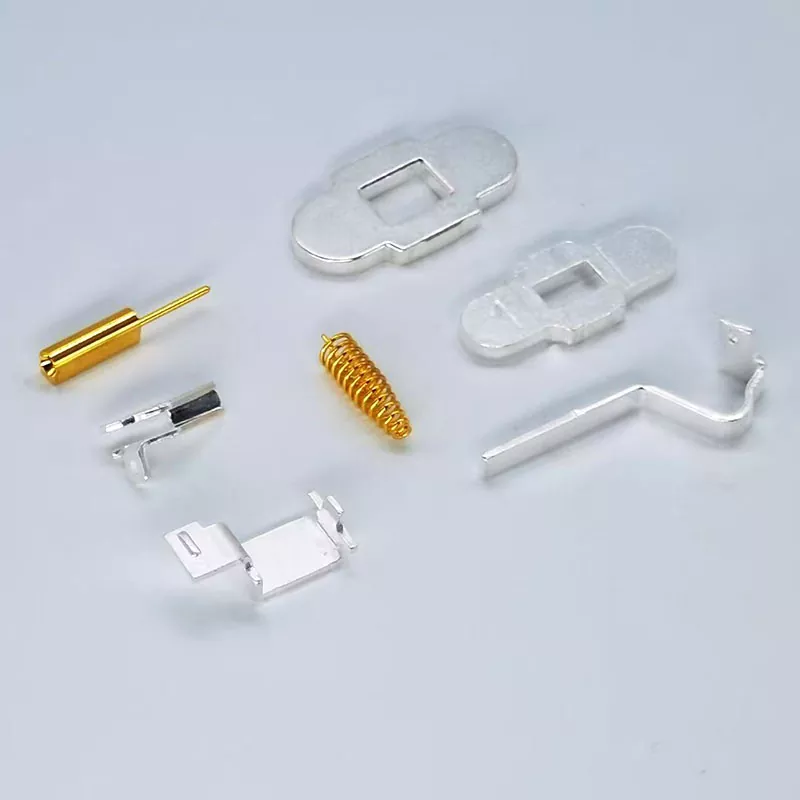
Table of Contents
- 1. Overview of Electronic Precision Stamping Contacts
- 2. Key Applications
- 3. Materials and Coating Considerations
- 4. Manufacturing Processes and Techniques
- 5. Design and Engineering Challenges
- 6. Quality Assurance and Testing
- 7. Advantages of High-Quality Stamping Contacts
- 8. How to Select the Right Contacts for Your Application
- 9. Frequently Asked Questions (FAQ)
- 10. Conclusion
1. Overview of Electronic Precision Stamping Contacts
Electronic precision stamping contacts are specially designed metal components used to establish reliable electrical connections. Unlike traditional connectors, these contacts are stamped with extreme precision to meet stringent electrical and mechanical standards. Precision stamping ensures dimensional accuracy, consistent conductivity, and durability under high stress conditions.
- Definition: Small metal contacts made using high-precision stamping techniques.
- Function: Facilitate low-resistance electrical connections and maintain signal integrity.
- Importance: Integral to performance-critical applications such as automotive electronics, medical devices, and communication systems.
2. Key Applications
Electronic precision stamping contacts are used in a variety of industries due to their reliability and performance advantages.
| Industry | Typical Use Cases | Key Requirements |
|---|---|---|
| Automotive | ECUs, sensors, battery connectors | High vibration resistance, low resistance, long life |
| Consumer Electronics | Smartphones, laptops, wearable devices | Miniaturization, high conductivity, corrosion resistance |
| Medical Devices | Diagnostic instruments, monitoring equipment | High reliability, biocompatibility, precision |
| Telecommunications | Network equipment, connectors, switches | Signal integrity, low insertion loss, long lifespan |
3. Materials and Coating Considerations
Material selection is crucial for achieving high performance in stamping contacts. Common materials include:
- Copper Alloys: Excellent conductivity and mechanical strength.
- Brass: Good balance of conductivity and formability.
- Phosphor Bronze: Strong fatigue resistance and elasticity.
Surface coatings enhance performance:
- Gold Plating: Reduces contact resistance and prevents oxidation.
- Tin Plating: Cost-effective, corrosion-resistant option.
- Nickel Plating: Provides durability and wear resistance.
4. Manufacturing Processes and Techniques
The precision stamping process combines advanced machinery and expert engineering to produce high-quality contacts.
- Design & Tooling: Computer-aided design (CAD) creates accurate stamping dies.
- Stamping: High-speed presses cut and form the metal into precise shapes.
- Deburring & Cleaning: Removes rough edges and ensures surface smoothness.
- Plating & Finishing: Adds protective coatings to improve conductivity and lifespan.
- Inspection: Dimensional and functional checks ensure quality standards.
5. Design and Engineering Challenges
Designing electronic precision stamping contacts requires balancing electrical, mechanical, and environmental demands.
- Miniaturization: As devices shrink, contacts must maintain performance in smaller sizes.
- Durability: Contacts must withstand mechanical stress, repeated mating cycles, and thermal fluctuations.
- Electrical Performance: Low resistance, minimal signal loss, and stable conductivity are critical.
- Custom Shapes: Complex geometries may be needed for specialized applications.
6. Quality Assurance and Testing
Ensuring the reliability of stamping contacts involves strict testing protocols:
- Electrical Testing: Measures resistance, conductivity, and signal performance.
- Mechanical Testing: Includes fatigue, insertion force, and retention tests.
- Environmental Testing: Simulates temperature, humidity, and corrosive conditions.
- Dimensional Inspection: Verifies consistency and adherence to design tolerances.
7. Advantages of High-Quality Stamping Contacts
High-quality electronic precision stamping contacts offer significant benefits:
- Reliability: Ensures stable electrical connections over time.
- Performance: Enhances conductivity and reduces signal loss.
- Durability: Resists wear, corrosion, and mechanical stress.
- Cost Efficiency: Reduces maintenance, replacements, and device downtime.
- Scalability: Suitable for mass production without compromising quality.
8. How to Select the Right Contacts for Your Application
Selecting the optimal stamping contact involves evaluating key factors:
| Factor | Considerations |
|---|---|
| Material | Conductivity, mechanical strength, corrosion resistance |
| Size & Shape | Compatibility with device footprint, miniaturization needs |
| Coating | Gold, tin, nickel based on application and cost |
| Durability | Expected insertion cycles, vibration, thermal conditions |
| Regulatory Compliance | RoHS, REACH, or other industry standards |
9. Frequently Asked Questions (FAQ)
Q1: What is the difference between precision stamping contacts and traditional contacts?
A1: Precision stamping contacts offer tighter tolerances, higher conductivity, and longer lifecycle compared to traditional contacts, which may not meet modern electronic standards.
Q2: Can stamping contacts be used in high-frequency applications?
A2: Yes, precision contacts are designed to maintain signal integrity and minimize insertion loss in high-frequency electronics.
Q3: How long do electronic stamping contacts last?
A3: The lifespan depends on material, plating, and usage, but high-quality contacts can last millions of insertion cycles under standard conditions.
Q4: Are these contacts customizable?
A4: Yes, manufacturers can provide custom shapes, sizes, and plating options to meet specific application requirements.
Q5: How can I ensure quality when sourcing stamping contacts?
A5: Work with reputable manufacturers, request material certifications, and insist on sample testing to ensure performance meets your standards.
10. Conclusion
Electronic precision stamping contacts play a crucial role in modern electronics, ensuring reliable electrical connections, performance, and device longevity. Understanding materials, manufacturing processes, and selection criteria can help engineers and buyers make informed decisions. By partnering with a trusted manufacturer like Xiamen Lijingda Hardware Products Co., Ltd., you can access high-quality stamping contacts tailored to your application needs. Contact us today to learn more about our solutions and request a quote.