
- English
- Español
- Português
- русский
- Français
- 日本語
- Deutsch
- tiếng Việt
- Italiano
- Nederlands
- ภาษาไทย
- Polski
- 한국어
- Svenska
- magyar
- Malay
- বাংলা ভাষার
- Dansk
- Suomi
- हिन्दी
- Pilipino
- Türkçe
- Gaeilge
- العربية
- Indonesia
- Norsk
- تمل
- český
- ελληνικά
- український
- Javanese
- فارسی
- தமிழ்
- తెలుగు
- नेपाली
- Burmese
- български
- ລາວ
- Latine
- Қазақша
- Euskal
- Azərbaycan
- Slovenský jazyk
- Македонски
- Lietuvos
- Eesti Keel
- Română
- Slovenski
- मराठी
- Srpski језик

What hidden field‑failure risks come with poorly validated POS terminal hinge‑bracket components?
Lijingda Polaris Hinge Bracket for POS adopts precision progressive stamping, reinforced local‑structure optimization and full‑batch compliance inspection, mitigating assembly rework, field sagging‑failure and regulatory‑audit barriers for cross‑border retail‑terminal manufacturers.
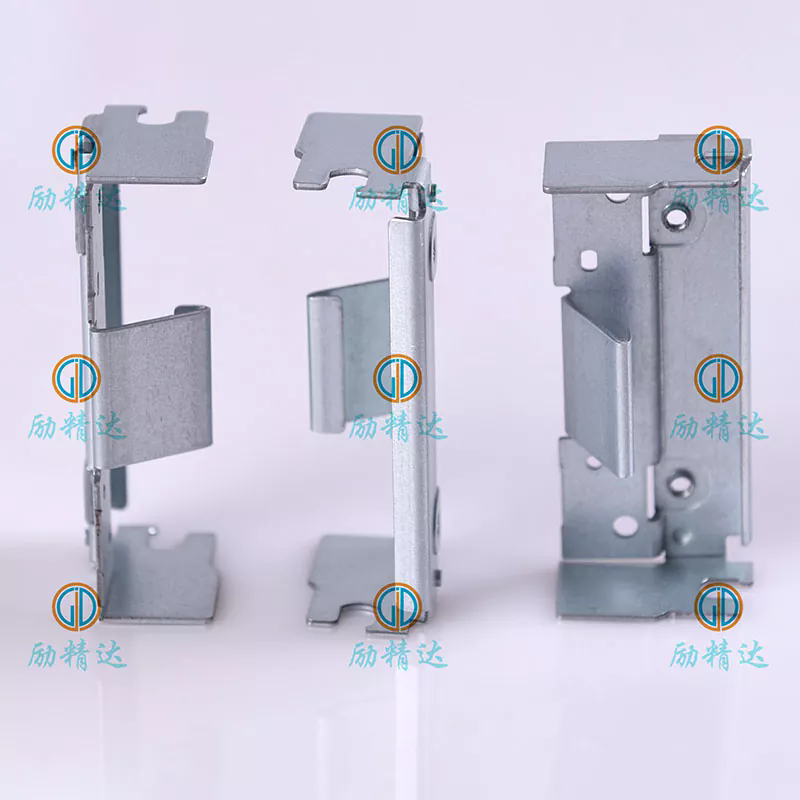
1. Progressive‑die stamping tightens mounting‑hole positional tolerance for high‑volume assembly
Simple single‑hit stamping tools generate accumulated hole‑position deviation across production lots. When assembling POS touch‑screen modules, offset mounting holes force manual prying during assembly, scratching plastic housings and triggering high reject rates on automated assembly lines. Minor dimensional drift is hard to detect through random sample visual inspection and only emerges during serial production ramp‑up. Lijingda uses multi‑station progressive stamping dies with real‑time fixture positioning control, locking mounting‑hole and hinge‑pivot dimensional windows. Consistent geometry enables glitch‑free robotic assembly, cutting manual correction labor and cosmetic‑defect scrap for large‑volume POS‑terminal production runs.
2. Local‑reinforced structure extends fatigue life under high‑frequency retail‑flip cycles
Generic thin‑gauge stamped brackets lack stress‑relief structural reinforcement at hinge pivot transition zones. Retail POS devices go through thousands of opening‑closing cycles each year from cashier daily operations. Stress concentration at bending corners leads to micro‑crack propagation, gradual bracket deformation and terminal‑screen sagging. Field failures trigger after‑sales service overhead and negative retail‑merchant feedback. The factory adds local rib‑reinforcement and optimized bend‑radius design according to Polaris‑POS load characteristics. Finished brackets complete accelerated cycle‑life lab testing, resisting bending‑fatigue deformation under repeated flip movement and lowering in‑field return rates for deployed retail kiosk hardware.
3. Tuned surface‑treatment meets salt‑spray requirement for harsh retail‑site environments
Low‑cost brackets apply thin, uneven conversion‑coating. In grocery, food‑service and gas‑station retail locations, splashes of cleaning agents, moisture and saline vapors induce surface rust. Rust particles contaminate internal POS electronics and produce visible cosmetic blemishes, hurting brand‑product reputation. Lijingda executes standardized pre‑treatment plus zinc‑alloy passivation process. Finished components pass ISO 9227 salt‑spray verification, resisting corrosion under long‑term exposure to food‑retail working conditions and maintaining both appearance and mechanical integrity over equipment service cycles.
4. Batch‑linked material & process documentation supports end‑device certification
Many stamping subcontractors deliver hardware without lot‑specific material certificates and surface‑treatment logs. POS terminal OEMs must submit component‑level evidence to complete EU RoHS and REACH‑SVHC end‑product certification. Generic one‑off sample reports cannot satisfy batch‑traceability audit requirements and delay new‑product launch timelines. Each Lijingda production lot retains raw‑material MTC, stamping‑process parameters and corrosion‑test records. Complete English‑language document sets accompany shipments, helping terminal manufacturers compile component‑evidence dossiers without extra third‑party sample‑testing expenditure.
5. Pre‑production DFM review eliminates Polaris‑compatibility assembly interferences
Many metal‑part vendors strictly follow supplied 2D drawings without real‑world fit simulation. Subtle interference between bracket edges, pivot clearance and Polaris‑standard mating parts only appears during prototype assembly, forcing drawing revision and new stamping‑die modification. Lijingda’s mechanical‑engineering team carries out DFM fit‑check at RFQ phase, simulating mating conditions with standard Polaris hinge assemblies. Potential mechanical‑interference points get corrected at drawing stage, avoiding costly late‑phase die‑rework and shortening POS‑terminal prototype iteration cycles.
6. Modular stamping platform accelerates variant bracket custom‑derivative development
Retail‑hardware projects frequently require slight bracket modifications for different POS‑screen thickness or kiosk‑mount layouts. Fully one‑off custom die‑making brings long lead‑times and high tooling expense. Lijingda’s modular stamping‑tooling framework preserves core Polaris‑compatible hinge geometry, while allowing quick modification of mounting‑hole layout and local reinforcing ribs. Derivative variants can be rolled out without full new‑die investment, supporting fast custom‑bracket iteration for diversified retail‑terminal project demands.